
Shirt Design Copper Necklace with Custom Prayer Engraving
Copper Necklace with Prayers
Shirt Design.
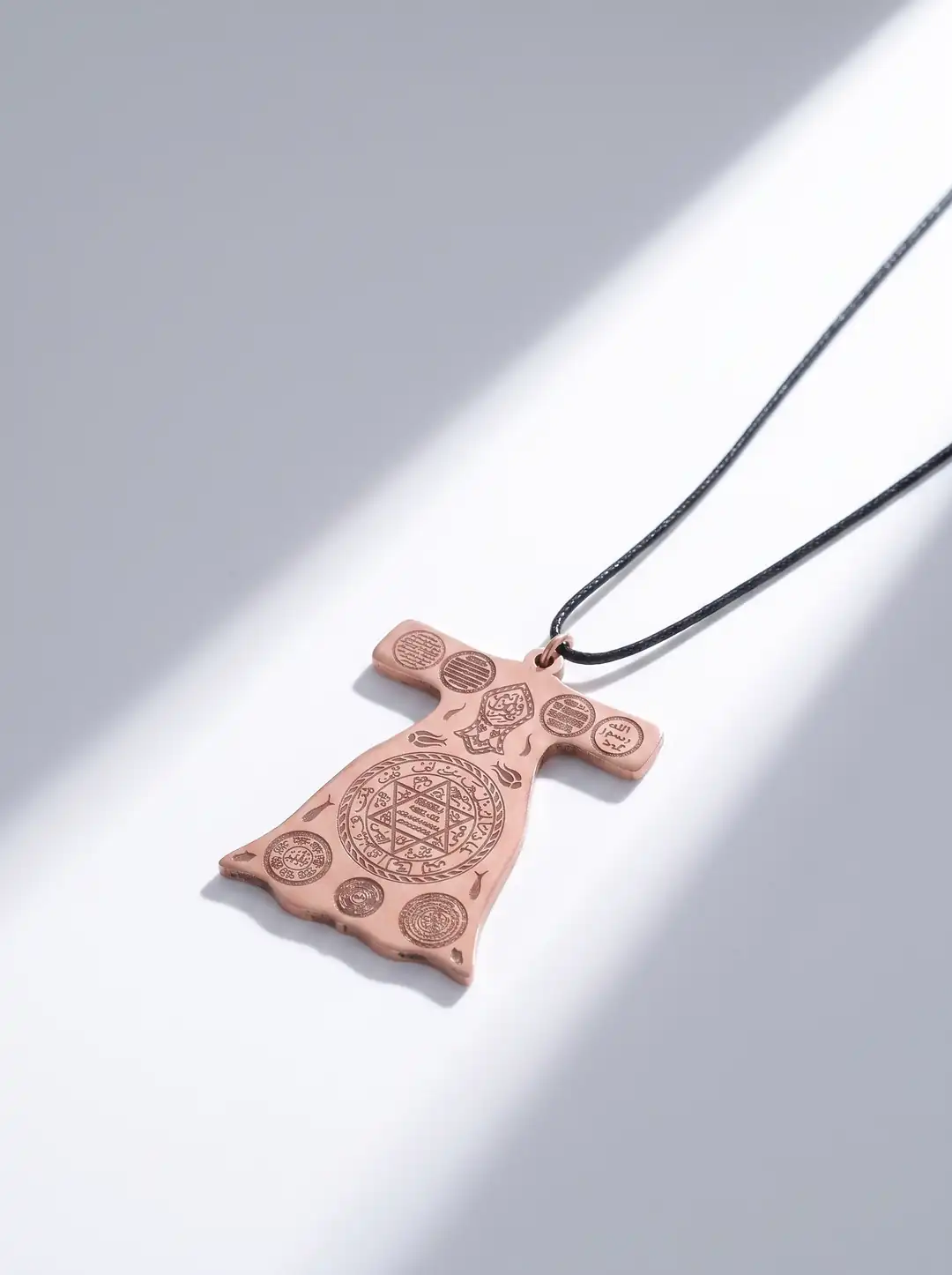
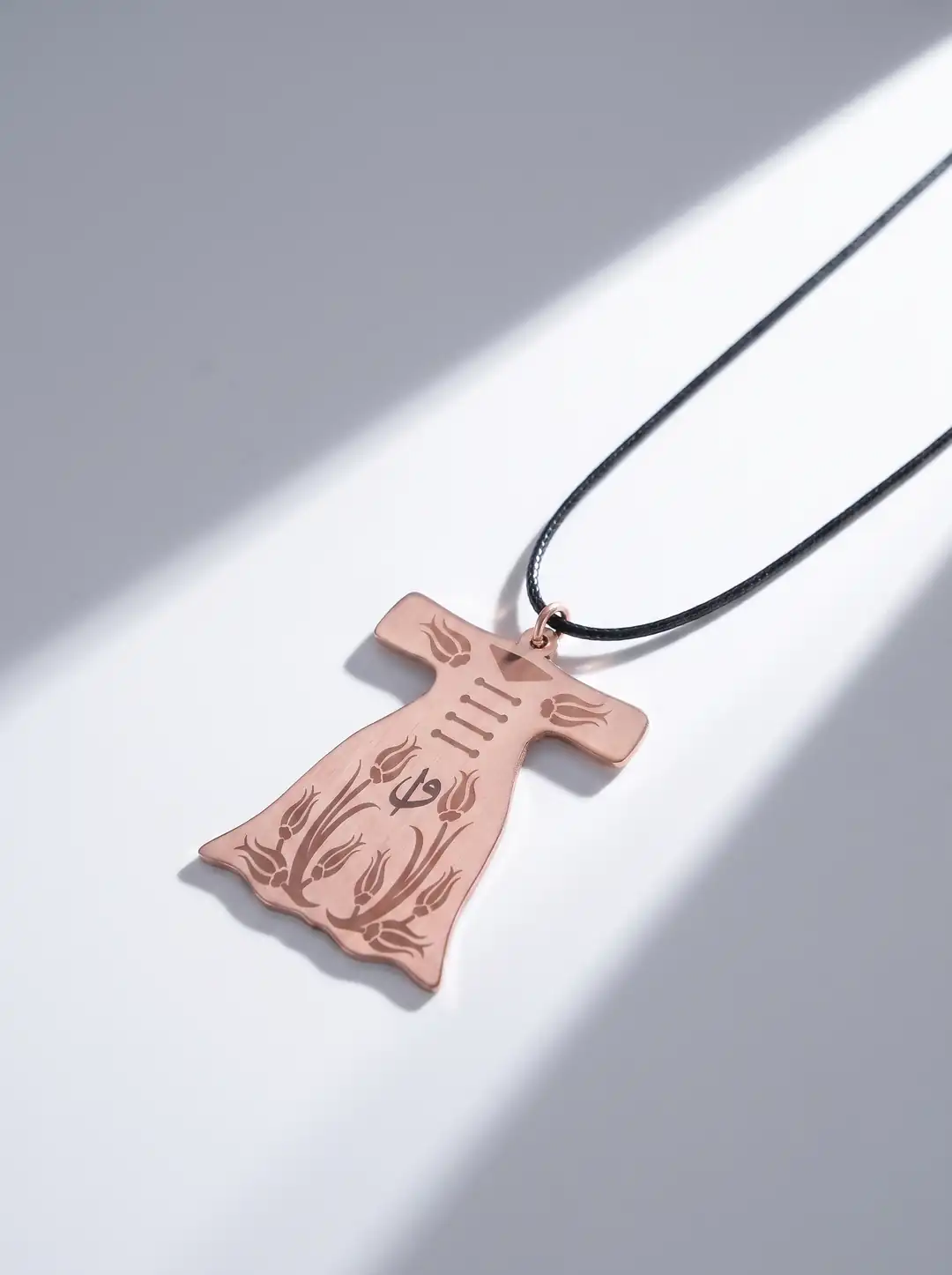
A shirt-shaped pendant with prayers and traditional seals on the front and Alif-Waw and tulip motifs on the back. At 42 x 55 mm, one of Sırlı Sepet's most detailed copper necklaces.
Key features
Every detail with a purpose.
Prayers and symbols
From the tradition of the prayer shirt.
It is known that in the Ottoman period, shirts were prepared engraved from head to toe with verses and prayers; examples of these shirts are in museum collections today. Sırlı Sepet interprets the form of this tradition in a copper pendant that can be worn at the neck.
Ayat al-Kursi
It is verse 255 of Surah Al-Baqarah. It describes Allah's oneness, that He is ever-living and the sustainer of all things, and that His power encompasses the heavens and the earth.
Surahs Al-Falaq and An-Nas
They are the last two surahs of the Holy Quran (113 and 114). They are about seeking refuge in Allah; together they are known as the "Mu'awwidhatayn."
Seal of Solomon
The seal attributed to Prophet Solomon. With its six-pointed form made of two interlocking triangles, it has been frequently used as an ornamental motif in Islamic art and handicrafts.
Noble Seal
A seal narrated to have been used in the letters of Prophet Muhammad; on it, in three lines from top to bottom, are the words "Allah," "Rasul" and "Muhammad."
Nal-i Sharif
A depiction of the blessed sandal of Prophet Muhammad. In Ottoman calligraphy and illumination, it is worked as a motif expressing love for the Prophet.
Qitmir
The name traditionally given to the dog in the story of the Companions of the Cave told in Surah Al-Kahf. It is cited as a symbol of loyalty and often appears in prayer panels.
Jaljalutiyya
A traditional prayer qasida attributed to Imam Ali, containing Arabic and Syriac words. It appears in traditional prayer writings and seal work.
Alif and Waw
Two letters of the Arabic alphabet. In Sufi interpretation, Alif symbolizes the oneness of Allah, and Waw symbolizes the human being and oneness; the two are often stacked together in calligraphy.
Tulip
One of the most beloved motifs of Ottoman ornamental art. Because it has the same abjad value as the word "Allah," it has additionally been given meaning in tradition.
This product is a piece of jewelry with spiritual and cultural meaning; it is not a protective object. Prayers and symbols are merely a means; only Allah protects and heals.
Technical specifications
Sizes and details.
Crystal quartz
How often
should it rest?
Your necklace in crystal quartz stones overnight, about once every 4–5 days on average, is considered the ideal duration for neutralizing. Some people do this every other day, others every 15 days or once a month; it is a personal preference. If you wear it regularly, at least once every 15 days we recommend.
This product does not include crystal quartz; so that you can rest it regularly, we recommend adding Crystal Quartz Neutralizing Stonesand, against tarnishing, the Copper Care and Cleaning Settogether with it.
Care
It tarnishes.
And returns to its original state.
All copper tarnishes over time. Copper is a natural raw material; it oxidizes through contact with skin and air and may leave a temporary color on the skin. This alone is not a flaw; it is the nature of copper. Copper Care and Cleaning Set it returns to its original state when you clean it with
Warning for the engraved surface: The solution can be used, but it is not completely safe for the engraved surface and may erase the writing. Even if the writing is erased, the solution restores the copper to its former state.
Frequently asked questions
What you may be wondering.
What is written on the necklace?
On the front are engravings related to Ayat al-Kursi, Surah Al-Falaq and Surah An-Nas, the evil eye prayer, Jaljalutiyya, Seal of Solomon, Noble Seal, Seal of Haqqani, Nal-i Sharif, Qitmir and the Companions of the Cave; on the back are Alif-Waw and tulip motifs.
Does it look too big on the neck?
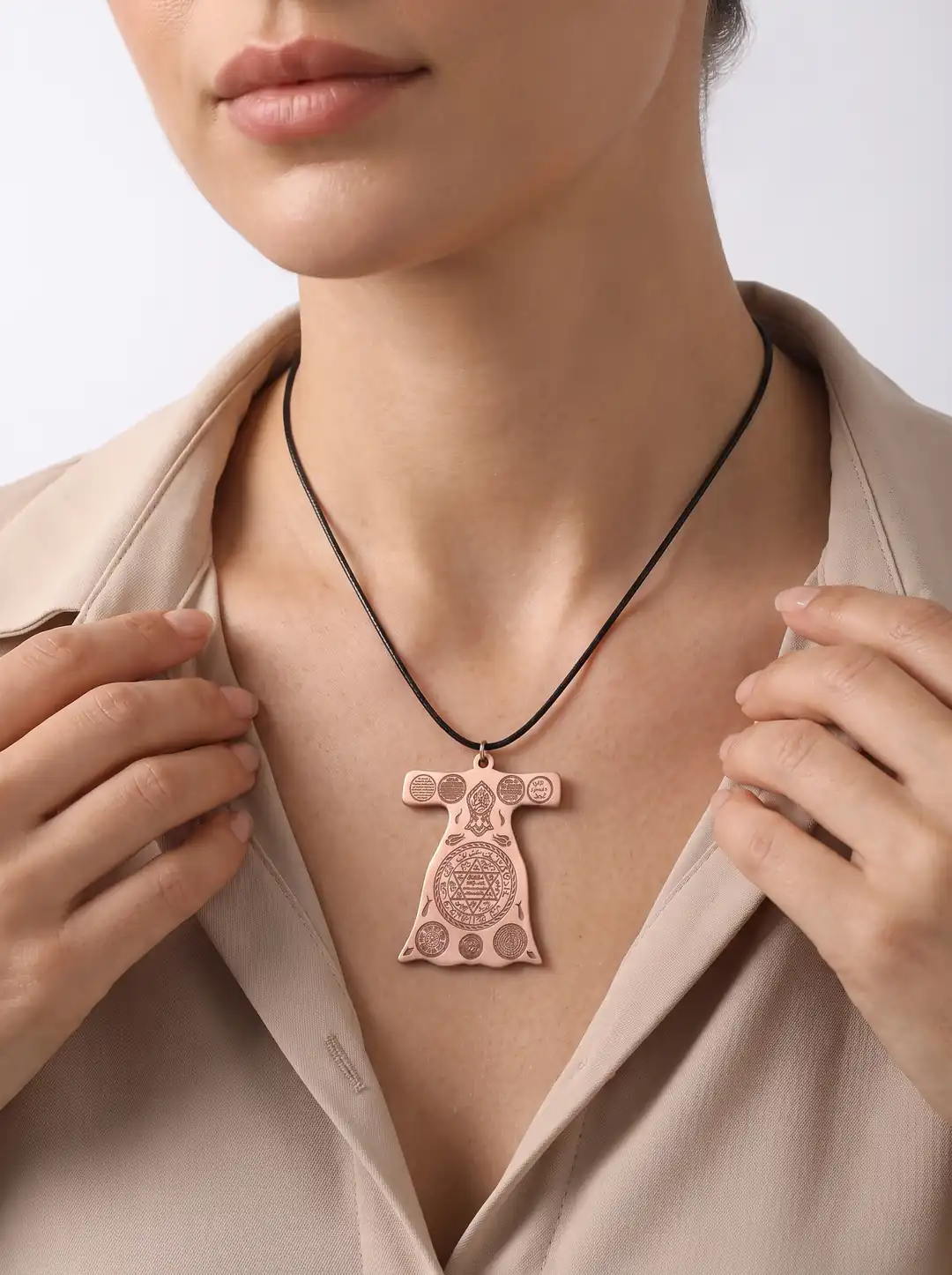
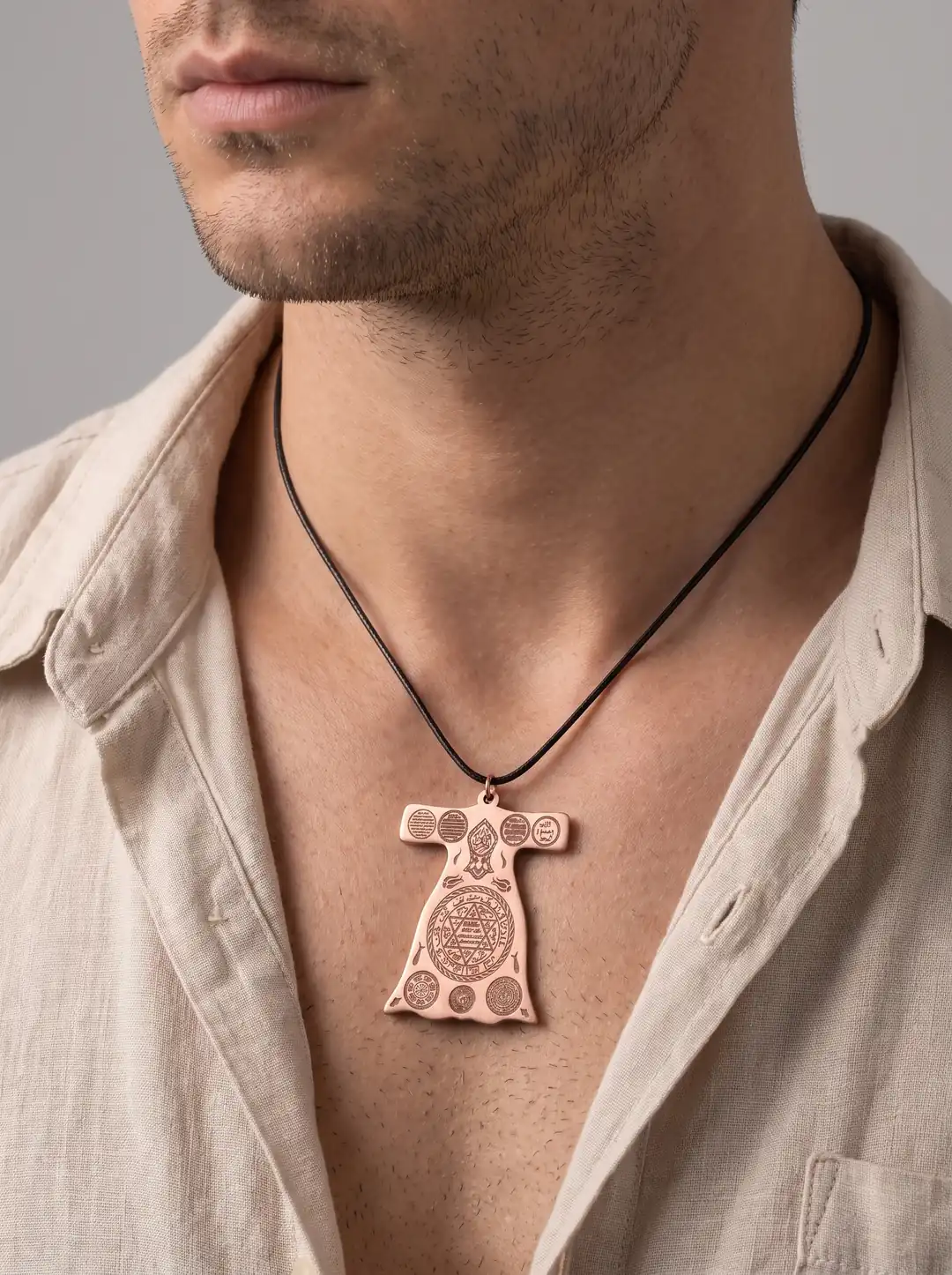
At 42 x 55 mm, it is a distinct pendant; it can be worn inside or over the collar.
Should I take it off when going to the restroom?
Because it carries sacred texts, it is recommended to take it off when entering the restroom or to keep it fully covered under clothing.
Does the necklace tarnish?
Yes, copper tarnishes over time; this is the nature of copper. When cleaned with the Copper Care and Cleaning Set, it returns to its original state.
Can men wear it too?
Yes. With its simple black cord and round form, it is a unisex model suitable for women and men.
The tradition at its most intense.
The prayer on it is not protective; only Allah protects. Copper is also not protective, guarding or healing; Sırlı Sepet makes no health claims about this product. Such products are used only within the framework of alternative medicine. Healing should be sought only in medicine; consult your doctor for health concerns.
What do buyers say?
There are no reviews for this product yet. Be the first to write one!